What makes the HIBT 3+3 genuinely different from every other mid-length on the market? Two-time World Longboard Champion Harley Ingleby sat down with Hawaiian South Shore to walk through the entire design story — from his first asymmetrical experiment in 2016 to the breakthrough that made the 3+3 fin system click. After over two years of R&D with shaper Billy Tolhurst, this is the first board they truly built from the ground up together.
VIDEO TIMESTAMPS:
0:00 - Introduction: What is the HIBT?
0:28 - Name Explained: First Full Collab with Billy Tolhurst
0:58 - How Long Did Development Take?
1:30 - The 3+3 Fin System Origin Story
2:00 - The Twinion Asym and 2016 Experiments
3:15 - Key Discovery: Fins vs. Plan Shape
4:20 - Adding a Twin Plug to a Symmetrical Quad Board
6:00 - Why the Idea Was Parked and Why It Came Back
8:30 - Design Goal: Between the Moe and Mid 6
10:00 - Rocker Choice: BT Twin Fin Rocker
12:00 - Bottom Contour: Double Concave
14:00 - The Sting-Style Flyer Explained
16:00 - How the 3+3 Setup Works
18:30 - Fin Recommendations Per Configuration
22:00 - Size Guide: 5'10" to 7'2"
26:00 - Rail and Foil Design
28:30 - HIBT vs. the Moe
30:00 - Which Size Is Harley Keeping?
31:30 - Closing Thoughts
WHAT YOU WILL LEARN:
Why this is the first true ground-up collaboration between Harley Ingleby and Billy Tolhurst
The 10-year origin story behind the 3+3 fin concept
How each fin configuration feels different and when to choose each
Why fin asymmetry delivers most of the feel of a full asymmetrical board
How the BT Twin Fin rocker makes this the fastest board in the lineup
The sting-style flyer and why the tail releases more like a shortboard at larger volumes
Full size guide from 5'10" at 32L to 7'2" at 50L
HIBT 3+3 DESIGN DEEP DIVE:
The HIBT 3+3 started with one clear goal: a fishtail performance board sitting between the Moe and Mid 6, offering something genuinely new. Harley and Billy tested multiple rockers, bottom contours, channels, and flyer styles before landing on a refined version of Billy's proven BT Twin Fin rocker — the flattest, fastest-trimming rocker in the entire lineup. The bottom is a flat entry flowing into a double concave underfoot, with Billy's signature rail relief built in.
The outline features a full nose, clean mid-section, and a sting-style flyer that cuts straight out of the rail into a deep fish tail. That flyer allows the tail to break free and rotate out of the lip with far less effort than expected from a quad at these volumes. Lip interaction is dramatically more shortboard-like than the Moe despite the overlapping size range. Construction is Thunderbolt Red — hand-layup EPS with 6+2oz bottom and 6+4oz deck for competition-level flex and durability.
WAVE CONDITIONS:
Designed for waist-high to head-high surf — 1 to 6 feet — but handles comfortably from knee-high playful runners to fast overhead conditions. The flat BT Twin rocker delivers exceptional trim speed through dead sections that neither the Moe nor the Mid 6 can match. In Hawaii, this shape performs across South Shore summer conditions — Canoes and Kaisers in smaller surf, Diamond Head and Rock Piles when there is more shape and push.
WHO SHOULD CONSIDER THIS BOARD:
Two surfer types get the most from the HIBT 3+3. First: existing Harley Ingleby riders on the Moe or Mid 6 who want something shorter and more performance-focused without leaving the Thunderbolt ecosystem. Second: experienced surfers curious about asymmetrical boards but unwilling to commit to a dedicated asym shape. The 3+3 system lets you experiment risk-free on a symmetrical outline. Shorter sizes (5'10" through 6'2") suit performance-focused surfers. Mid sizes (6'6" through 7'2") suit those downsizing from a longer mid-length or looking for a faster companion to their Moe or Mid 6.
HOW IT COMPARES:
Versus the Moe: faster through flat sections, more responsive off the top, more shortboard-like lip interaction. The Moe remains the more flowing, forgiving ride. V
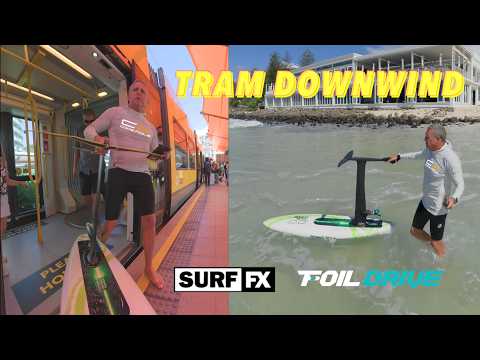 9:17
TRAM DOWNWIND FOIL DRIVE
Rob Pirie
2 views • 1 week ago
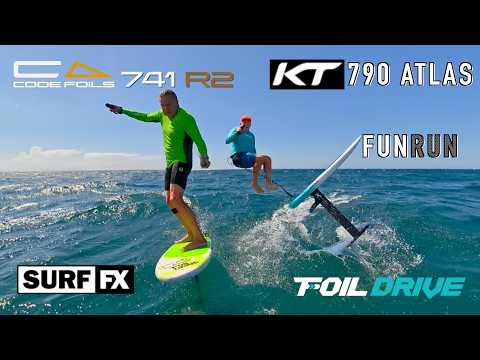 12:27
Code RS 741 & KT 790 ATLAS Foil Drive Downwind
Rob Pirie
1 views • 2 weeks ago
 17:00
Comment choisir sa planche de surf ? Thruster vs twin vs asymétrique... avec Chienville surfboards
OXBOW
8.7K views • 4 months ago
 8:37
Slingshot x Foil Drive Integrated Foil Assist Mast Tech Talk
Rob Pirie
9 views • 3 weeks ago
 14:13
FOIL DRIVE UPWIND DOWNWIND INSHORE OFFSHORE
Rob Pirie
3 weeks ago
 6:34
Mr Bennetts Zane Westwood Slowmo edit
bt foiler
40 views • 3 weeks ago
 4:07
Foil Drive Australia Wide Fat Ones
Rob Pirie
166 views • 3 weeks ago
 20:51
Foil Drive Max Plus +
Rob Pirie
19 views • 1 month ago
 1:37:07
The X-Foils Podcast: Case #79 – RIIFT
Kite Puerto Rico / N1 Surf shop
2.6K views • 1 month ago
 10:45
SUP Dawn and Friends
Rick Weeks
1.7K views • 1 month ago
 8:31
Great White Sharks Are Everywhere in Southern California
TheMalibuArtist
85K views • 1 month ago
 14:51
DIY Foil Assist 6 Month Update. Can The Ali Express Surf Taxi Home build Cut The Mustard. E-Prone 🌊
Pembrokeshire Foil Club
246 views • 1 month ago
